
Read the document purpose
A technical data sheet usually describes a commercial material and typical parameters. A safety data sheet supports hazard communication for the supplied material where applicable.
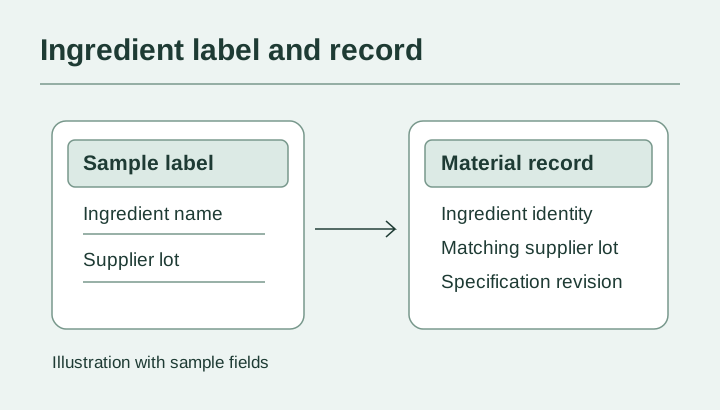
A certificate of analysis is generally linked to an identified lot or batch. Compare the lot number and relevant method to the actual shipment and agreed specification.
Check scope and consistency
Compare the product code, grade and presentation across the documents. Identical cover branding can hide an outdated version or a different material form.
If documents disagree on an ingredient name, raise the mismatch. The degree of analytical detail in a batch certificate does not settle the naming issue by itself.
Request the missing evidence
Specify whether the team needs a controlled ingredient statement, typical specification or actual batch result. This helps the supplier send a fit-for-purpose record.
Use the approved company CoA lookup when relevant and keep any shared report tied to the intended lot and commercial material.
Frequently asked questions
Can a safety data sheet replace an ingredient composition statement?
It serves hazard communication and may not provide every ingredient detail needed for a finished cosmetic label review.