
Choose the identifiers
Agree which code identifies the bulk, the packed lot and the printed version. Some teams use separate codes for product and order units, so preserve the exact type of each.
Document where the code is visible on the primary pack and outer package. A receiving team benefits from practical directions for finding it.
Keep records synchronized
Retain which finished lot was packed under which approved artwork. If more than one version is in circulation, keep the effective date and a visible identifier for each.
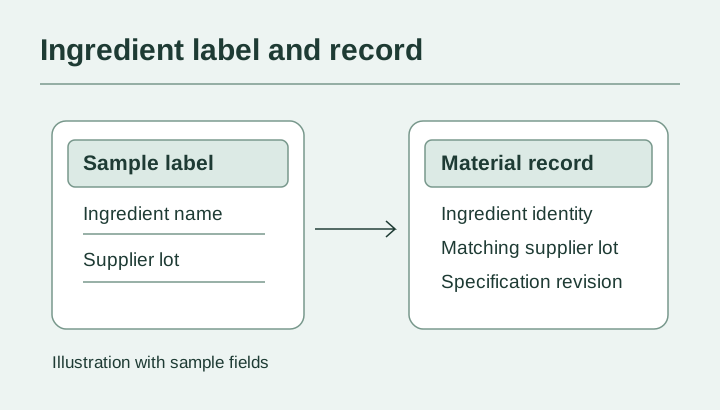
Connect the material batch evidence to the right grade and lot. A report held under the supplier's internal lot code may need a cross-reference to your receiving code.
Verify a real example
Choose one packed sample and request the linked formula, art release and input lot identifiers. Note any missing link without exposing supplier-confidential details to unauthorized recipients.
Make the route available to the people responsible for reviews. A record stored in a department's inbox can be difficult to recover during an urgent query.
Frequently asked questions
Must the label contain the full supplier lot?
The product team's finished label and traceability review are separate questions. Keep internal links to supplier lots regardless of the public code's format.